
How to Play Wordle: Rules, Colors, and Tips for Beginners
March 18, 2026
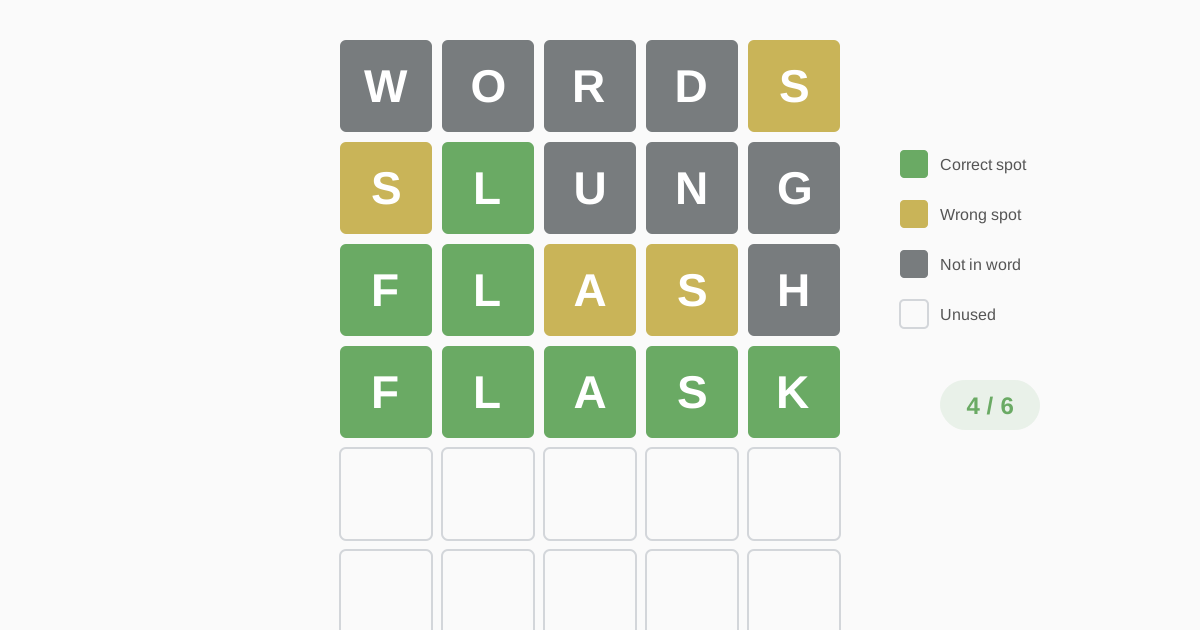
New to Wordle? Learn the six-guess rule, what green, yellow, and grey tiles mean, and how to use each row without wasting letters.
Table of Contents
What Is Wordle?
Wordle gives you six rows and one job: find the hidden five-letter word. Type any accepted five-letter guess and the tiles change colour. Green holds a letter in its correct spot, yellow sends it somewhere else in the word, and grey rules it out—usually. Repeated letters add one wrinkle, which we cover below.
Josh Wardle originally made the game for his partner. He released it publicly in October 2021, and its audience grew from 90 daily players to more than two million within a few months. The New York Times bought Wordle in January 2022.
Everyone receives the same daily puzzle, so a result can be shared without posting the letters themselves. That little grid of coloured squares was a large part of the game's early appeal: friends could compare attempts while leaving the word unspoiled. You can play without creating an account, although signing in can help preserve statistics across devices.
The Rules of Wordle
The board always hides a five-letter answer, and you have six attempts to find it. Guesses must be five-letter words accepted by the game's dictionary; a random string of letters will not go through. After each accepted guess, every tile turns green, yellow, or grey. Use that result before entering the next word.
A new puzzle arrives each day. The official game also keeps a record of results such as games played, win percentage, and streaks. If those statistics matter to you, signing in is safer than relying only on one browser, especially before clearing site data or moving to another device.
Understanding the Colors
A green tile is settled: the letter belongs exactly where you put it. Keep it in that position on later guesses.
A yellow tile confirms the letter but rejects the position. Move it. If A is yellow in the second square, the answer contains A somewhere in squares one, three, four, or five. Leaving it in square two on the next row throws away half of that clue.
A grey tile normally means the letter is absent, so the next guess should use something new. The exception appears when your guess repeats a letter. Suppose the answer has one E but your guess has two. Wordle can colour one E and leave the extra copy grey. In that situation, grey means there is no second E; it does not erase the coloured one.
Step-by-Step Walkthrough of a Sample Game
Here is a sample game with a hypothetical answer of CRIMP, showing how each guess builds on the last.
Guess 1: SLATE. S (grey), L (grey), A (grey), T (grey), E (grey). All five letters eliminated. Zero matches feels discouraging, but five common letters have been ruled out in one move, and that information is valuable.
Guess 2: GRIND. G (grey), R (yellow), I (yellow), N (grey), D (grey). R and I are in the answer but not in those positions. Three more letters eliminated, and two confirmed present.
Guess 3: PRICK. P (yellow), R (yellow), I (yellow), C (yellow), K (grey). Four yellow tiles. P, R, I, and C are all in the answer, but none in the right spot. That is a lot of confirmed letters, and now the challenge is arranging them correctly.
Guess 4: CRIMP. All green. Solved in four.
Each guess served a clear purpose. The first eliminated five letters, the second found two, the third confirmed four, and the fourth locked them into the correct arrangement.
Where to Play Wordle
The official game lives at nytimes.com/games/wordle. It is free in any browser, on desktop or mobile, and requires no download or account.
The New York Times Games app (available on iOS and Android) also includes Wordle alongside Spelling Bee, Connections, and the Crossword. Wordle remains free within the app even without a Games subscription.
Avoid third-party Wordle clones in app stores. They are not affiliated with The New York Times and frequently contain ads, trackers, or inaccurate word lists that can make the game behave differently than the real version.
Hard Mode Explained
Hard mode adds one constraint: any letter confirmed green or yellow must appear in all future guesses. Green letters stay locked in their position, and yellow letters must be included somewhere in the word.
You can toggle hard mode on or off via the gear icon, but only before making any guesses on the current puzzle.
This removes the ability to make exploratory guesses that test new letters without reusing confirmed ones. Every guess must incorporate all known information, which limits your options and can create situations where several valid words fit the same pattern with no way to distinguish between them. Hard mode solves show an asterisk on the share grid.
Tips for Absolute Beginners
Start with common letters. Words like SLATE, CRANE, and TRACE are strong first guesses because they test the most frequently appearing letters in Wordle answers. For a full ranking with the data behind each word, see the Best Starting Words guide.
Grey tiles are more valuable than they seem. After two guesses that both come back all grey, you have eliminated ten letters, leaving only 16 possibilities per position. That is enormous progress even though it might not feel like it.
Move yellow letters to new positions. A common early mistake is leaving a yellow letter in the same spot across multiple guesses. Yellow means right letter, wrong position, so it needs to go somewhere else.
Never reuse grey letters. Once a letter turns grey, it is confirmed absent from the answer. Including it in a future guess wastes a slot that could test something new.
Learn to recognize word patterns. Common endings like -IGHT, -ATCH, -OUND, and -ANCE appear frequently in Wordle answers. Spotting these fragments early helps you jump ahead to a small group of candidates instead of building the word from scratch. For deeper tactics on using patterns and tile feedback, see the Wordle Strategy Guide.
Take your time. There is no timer. Think through the remaining possibilities before committing to a guess.
Frequently Asked Questions
Yes. Wordle is free at nytimes.com/games/wordle with no account, subscription, or download required. It is also free within The New York Times Games app.
Once. The puzzle resets at midnight in your local time zone, and there is no way to replay the current puzzle on the official site.
The game reveals the answer after six failed guesses. Your streak resets to zero, but your total games played and win percentage continue tracking. A new puzzle arrives the next day.
Yes, in any mobile browser at nytimes.com/games/wordle or through The New York Times Games app on iOS and Android. It is free in both.
Josh Wardle, a Welsh software engineer living in Brooklyn, built it as a personal project for his partner. It went public in October 2021 and was acquired by The New York Times in January 2022.
Keep Reading
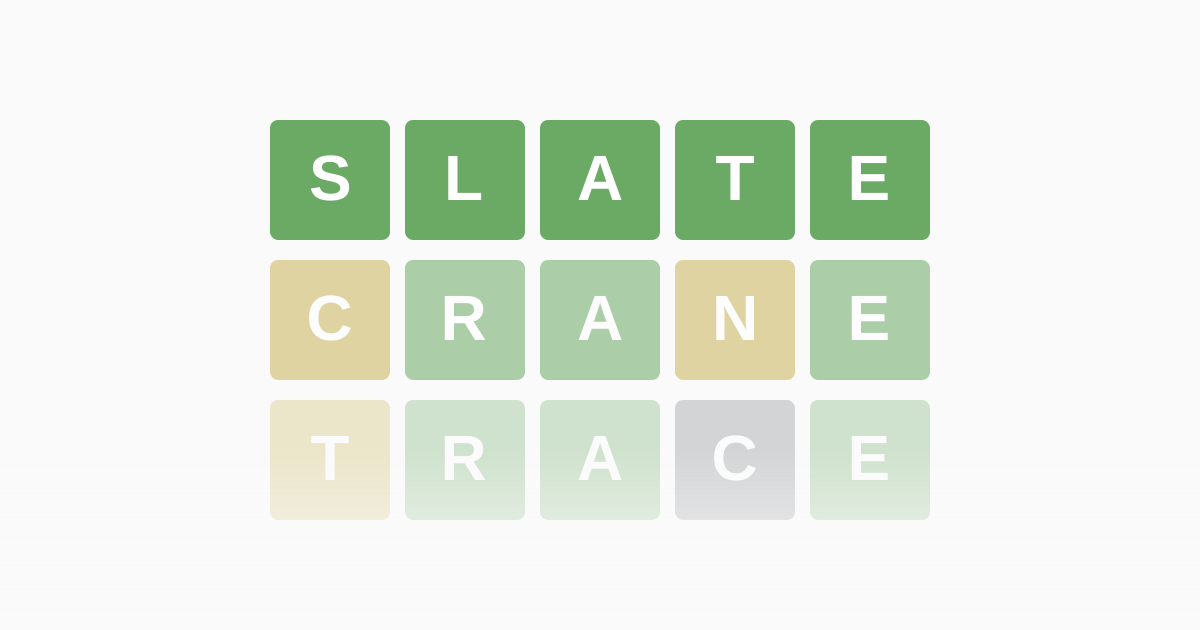
The 10 Best Wordle Starting Words in 2026 (Ranked by Data)
Which Wordle opener should you actually use? Compare SLATE, CRANE, SALET, and seven other choices using answer-list letter data.
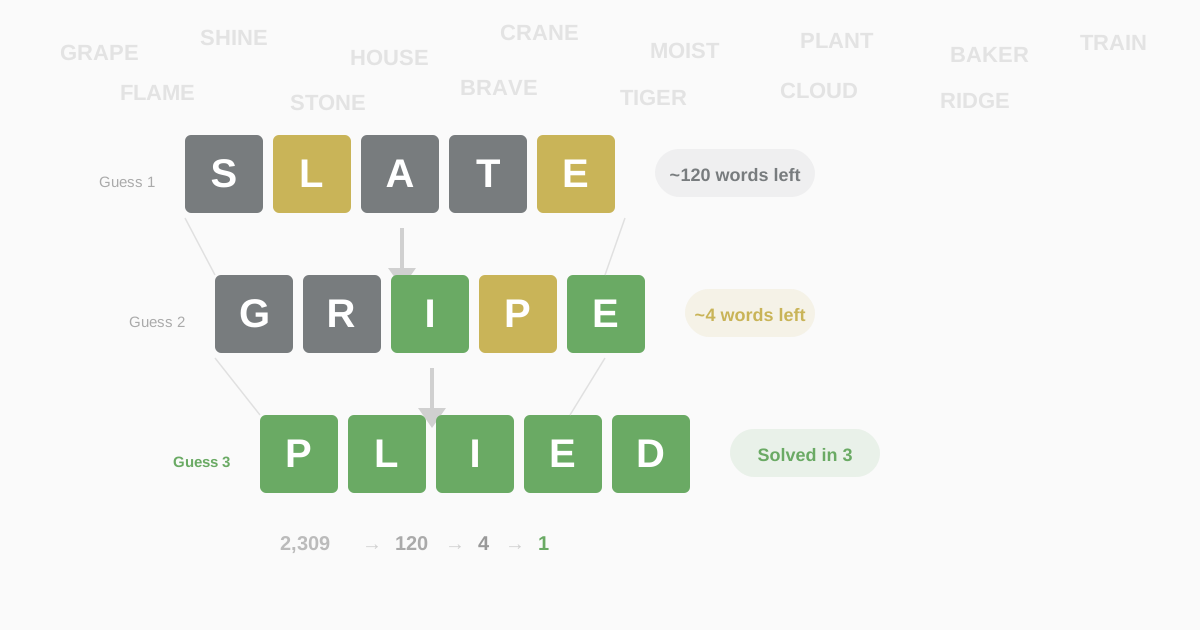
Wordle Strategy Guide: How to Solve in 3 to 4 Guesses
A practical Wordle strategy for using each tile, spotting repeated letters, avoiding word-family traps, and solving more often in three or four guesses.
Need today's Wordle hints?
Six progressive clues, the full answer, and difficulty analysis.
Today's Wordle Hints